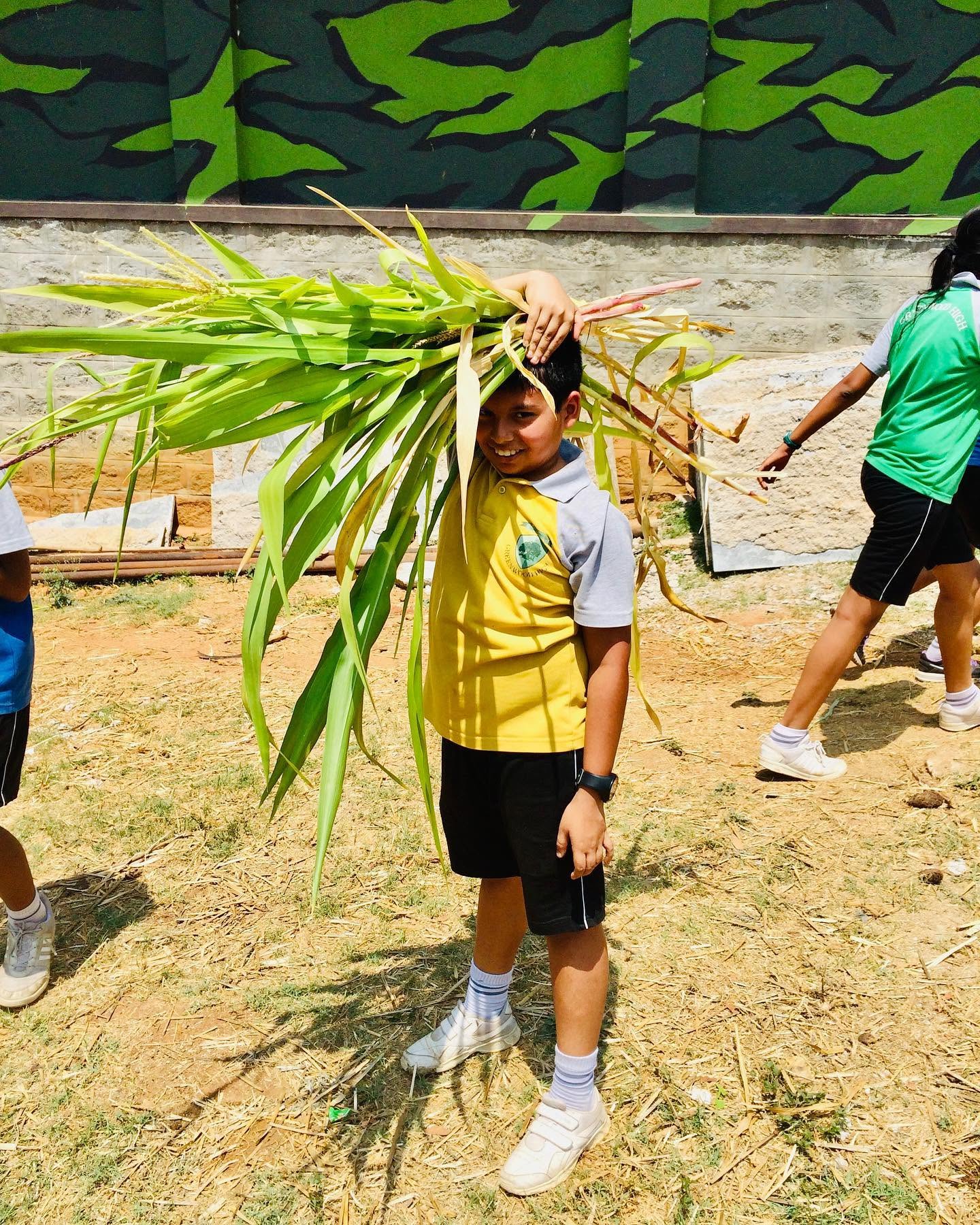
School students can experience hands-on farming activities near Bangalore at The Big Barn Nature Camp, where learning takes place in an organic farm environment rather than inside a traditional classroom. The program gives students an opportunity to explore how food is grown, understand sustainable farming practices, interact with farm animals and discover the biodiversity found around a working farm.
Designed as a 6-hour experiential learning program from 10 AM to 3 PM, the outing is suitable for students who want to understand farming, nature and sustainability through observation and practical experiences.
A farm visit can help students understand the connection between soil, plants, animals, water, food and people. At The Big Barn Nature Camp, students follow a guided farm trail where they learn about natural food-growing methods and see different agricultural practices in action.
The farm grows a variety of:
Instead of simply reading about agriculture, students can observe these plants in their growing environment and understand the time, effort and care involved in producing food.
One of the important concepts introduced during the farm experience is mixed and multi-cropping.
Students learn how different plants can be grown together and how farmers can work with natural systems. They also explore horticulture and understand the possibilities of growing several types of plants within the same farm ecosystem.
This makes the visit particularly useful for schools looking for experiential learning activities related to agriculture and environmental education.
The farm follows an agro-forest approach, allowing students to understand how farming can work alongside trees and biodiversity.
During the tree walk, students learn to identify different plants and trees while hearing stories and explanations about biodiversity, medicinal plants, fruits and spices.
The experience helps children understand that farming is not simply about planting and harvesting. It involves understanding soil, water, seasons, plants, insects, animals and the surrounding ecosystem.
Students also get an opportunity to meet and interact with farm animals and learn about their role within the farm.
The experience introduces children to the importance of cows and cow manure in natural farming systems. They can understand how farm animals can contribute to agricultural practices and how organic materials can be reused rather than treated as waste.
This creates a practical connection between animal care, farming and sustainability.
Composting is another important part of the farm learning experience.
Students learn about composting with worms and how organic waste can be converted into useful material for farming. The farm also focuses on recycling water and composting food waste as part of its sustainability practices.
These activities help students understand the idea of a circular system, where resources are reused instead of unnecessarily discarded.
Water is essential for agriculture, making rainwater harvesting an important part of the educational farm trail.
Students are introduced to rainwater harvesting practices and can learn why conserving water matters for farms and natural ecosystems.
Seeing these systems within a real farm environment can make concepts related to water conservation easier for students to understand than learning about them only from textbooks.
A farm is also a habitat for many forms of life.
During the nature walk, students may observe different types of small wildlife, including:
The program also introduces students to beekeeping and explains why insects such as bees are important to nature and agriculture.
This gives students a broader understanding of biodiversity and the relationships between plants, insects, animals and farming.
The educational experience is combined with recreational activities so that students can learn while staying active outdoors.
The program includes activities such as:
These activities add an element of adventure and creativity to the farm visit while keeping the experience connected to the natural surroundings.
Students can also enjoy meals and fruit that are farm fresh as part of the experience.
Having food during a farm visit creates another opportunity to discuss where food comes from and how farming connects to everyday life. Students can see the journey from growing plants to preparing food.
The Level II program is structured as a day-long experiential learning outing.
09:35 AM – 10:00 AM: Arrival and introduction
10:30 AM – 12:30 PM: Farm trail and walk
During the farm trail, students explore:
The overall program duration is approximately 6 hours, from 10 AM to 3 PM.
A hands-on farm visit can complement classroom education by giving students an opportunity to observe real-world examples.
Instead of only learning definitions such as composting, biodiversity, multi-cropping or rainwater harvesting, students can see how these concepts relate to one another within an actual farm ecosystem.
The experience can encourage students to:
The Big Barn Nature Camp offers schools an opportunity to take students beyond the classroom and into a natural farm environment.
From organic farming and agro-forestry to animal interaction, composting, rainwater harvesting, biodiversity, pottery and tractor rides, the program combines education, exploration and outdoor activities.
For schools searching for a hands-on farming activity near Bangalore, this type of experiential farm program can provide students with a practical introduction to agriculture and sustainable living.
1. Where can school students experience hands-on farming activities near Bangalore?
School students can experience hands-on farming activities at The Big Barn Nature Camp through a guided educational farm program covering organic farming, plant identification, animal interaction, composting, biodiversity and sustainable farming practices.
2. What do students learn during the farm visit?
Students learn about mixed and multi-cropping, horticulture, agro-forest farming, composting, rainwater harvesting, cow manure, beekeeping, biodiversity and plant identification.
3. How long is the school farm program?
The program is designed as a 6-hour experience from 10 AM to 3 PM.
4. Can students interact with farm animals?
Yes. Students can meet and interact with farm animals while learning about their role within the farm ecosystem and the importance of cows and manure.
5. Do students learn about sustainable farming?
Yes. Sustainability is an important part of the program, with activities and explanations covering rainwater harvesting, composting, water recycling, food-waste composting and natural farming methods.
6. What plants can students learn about?
Students can learn to identify different trees and plants, including medicinal plants, fruits, spices, vegetables and other crops grown on the farm.
7. Are there adventure activities during the farm outing?
Yes. The program includes low rope and high rope courses, a tractor ride, games and other outdoor activities alongside the educational farm trail.
8. Do students learn about biodiversity?
Yes. The tree walk introduces students to biodiversity and plants, while the farm environment provides opportunities to observe insects, amphibians, small mammals, reptiles and other forms of wildlife.
9. Is pottery included in the school farm program?
Yes. Pottery is included as one of the creative activities offered during the experiential learning outing.
10. What should students follow during the farm visit?
Students are expected to respect nature, local communities and the surroundings, follow the Leave No Trace principle and follow instructions from instructors, guides and coordinators. Participants are also required to complete the applicable indemnity formalities before participating in activities.
If your school is looking for an outdoor educational program where students can learn about farming, sustainability, biodiversity and nature through direct experience, The Big Barn Nature Camp offers a structured Level II farm learning program.
Program Duration: 6 hours
Timing: 10 AM to 3 PM
Activities: Farm trail, plant exploration, animal interaction, composting, rainwater harvesting, pottery, tractor ride, rope activities and more.
Enquiries: +91 98446 35400
The Big Barn is a farm in Bangalore ideal for kids picnics! Very close to the Bannerghatta National park! Come and be a farmer for a day! It is not a resort or a theme park!
