Children learn best when they can see, touch, explore, and experience things around them. A farm nature walk in Bangalore for kids is a wonderful way to move learning beyond the classroom and introduce children to plants, animals, farming, biodiversity, and sustainable living.
At The Big Barn Nature Camp, children aged 6 to 11 can experience a guided nature and farm visit where education, outdoor activities, and hands-on experiences come together. Instead of simply reading about nature, children get an opportunity to observe it closely, understand where food comes from, interact with farm animals, and discover how natural resources can be used responsibly.
A nature walk is more than a simple walk through greenery. For children, it can become an interactive learning experience.
During a guided farm nature walk, children can observe different types of plants, trees, insects, birds, butterflies, and domestic animals. They can ask questions about how plants grow, how farms use water, what happens to organic waste, and how farming methods can support biodiversity.
The experience encourages children to slow down, observe their surroundings, and develop curiosity about the natural world.
One of the most valuable lessons children can learn on a farm is understanding where their food comes from.
At The Big Barn Nature Camp, children can explore a certified organic farm and learn about farming practices, crops, irrigation, composting, and agro-forest techniques.
The experience can help children understand that the food on their plate has a journey. Seeds need soil, sunlight, water, care, and time before they become vegetables, fruits, grains, or other food products.
This practical understanding can make concepts taught in school more meaningful.
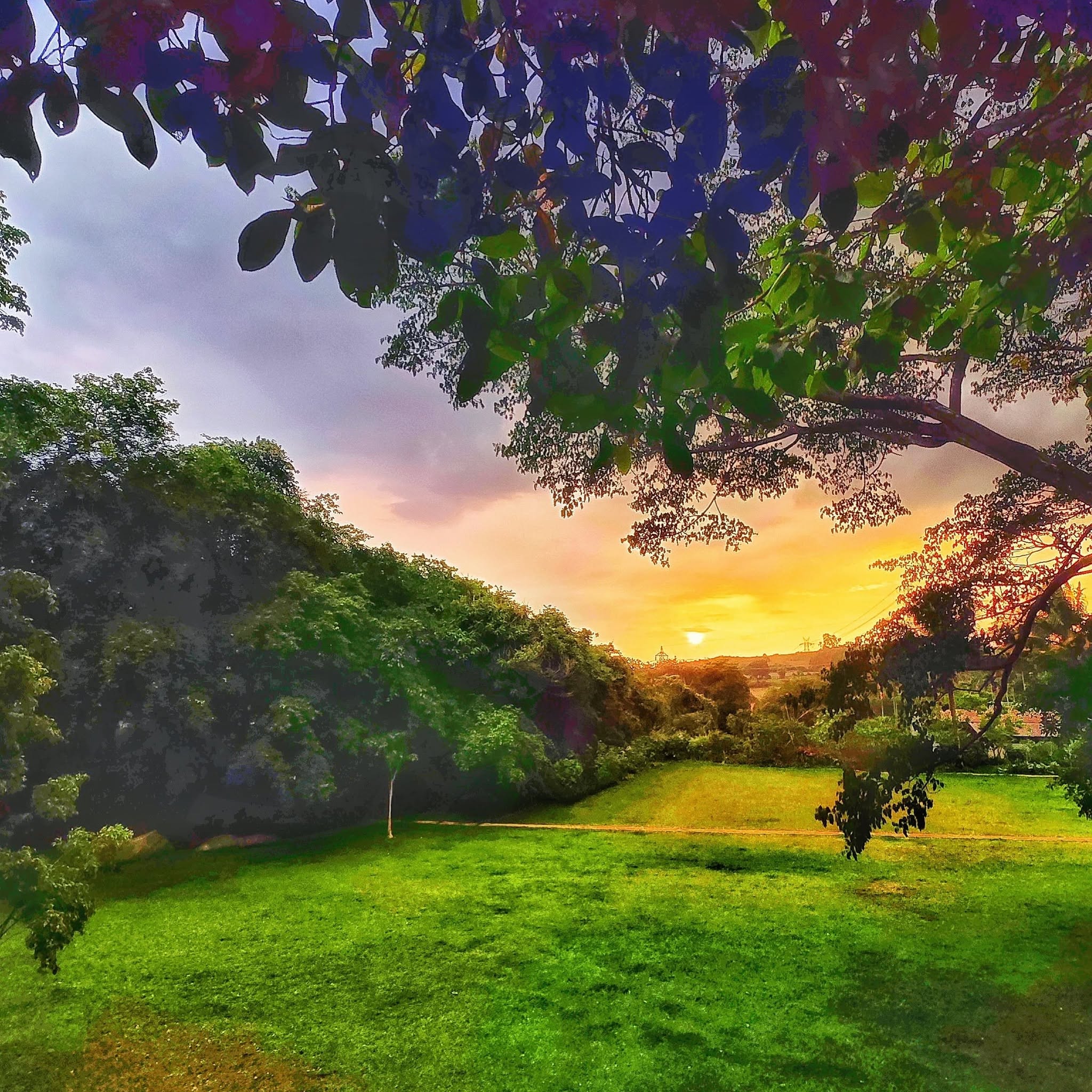
The farm is surrounded by rich greenery, with more than 200 species of trees. A guided nature walk gives children an opportunity to look closely at the vegetation around them.
Depending on the season, children may learn about:
Instead of memorising names from a textbook, children can observe plants in their natural environment.
Animals can make a farm visit especially engaging for children.
The farm has domestic animals and birds that children can observe and, where appropriate, interact with under guidance. Meeting animals can help children understand responsible animal care and develop empathy towards living creatures.
Children may get opportunities to observe farm animals and birds while learning about their role in a farm environment.
This can also become a simple lesson in respecting animals, maintaining safe distances when required, and understanding that every living creature has a place in an ecosystem.
A farm nature walk also gives children the chance to notice wildlife that they might otherwise overlook.
The Big Barn Nature Camp is home to approximately 150 species of butterflies and around 80 species of birds. Children can learn to observe movement, colours, sounds, and habitats while walking through the farm.
They may also encounter small wildlife such as insects, amphibians, small mammals, and reptiles.
The purpose is not simply to spot wildlife. It is to encourage children to understand biodiversity and why different organisms are important to the environment.
What happens to food scraps, leaves, and other organic waste?
This is an important sustainability lesson that children can explore during a farm visit.
Organic waste management can introduce children to concepts such as composting and the natural decomposition process. They can understand how certain waste materials can return nutrients to the soil instead of simply being thrown away.
These lessons can encourage children to think about waste management at home and at school.
Water is essential for both farming and everyday life. A farm provides a practical setting for children to understand why water conservation matters.
Through rainwater harvesting activities and demonstrations, children can learn how rainwater can be collected and managed for useful purposes.
They can explore questions such as:
Learning these concepts in an actual farm environment can make sustainability easier for children to understand.
Farming involves much more than planting a seed. Children can discover how farmers plan crops, manage soil, provide water, and care for plants.
The program introduces children to farming and irrigation methods while allowing them to see the connection between water, soil, plants, and food production.
They can also learn about mixed and multi-cropping approaches, composting, and agro-forest techniques as part of their guided farm experience.
Learning does not have to mean sitting still.
The program combines the nature walk and sustainability lessons with seven adventure activities designed for children in the 6–11 age group.
Adventure activities can encourage:
Adventure activities are conducted with instructors and coordinators present to guide participants and maintain the planned schedule and safety procedures.
The camp can accommodate a maximum of 150 students per day for adventure activities.
Along with nature exploration and adventure activities, children can also take part in pottery and games.
Hands-on activities provide a break from conventional classroom learning and allow children to explore creativity while spending time outdoors.
The combination of nature walks, farming, animals, sustainability lessons, pottery, games, and adventure creates a varied day where children can learn through different experiences.
A key part of a farm nature walk is teaching children to respect the environment.
Participants are expected to follow a Leave No Trace approach by avoiding littering and not leaving waste along walking routes or around the camp.
Children are also encouraged to behave respectfully towards nature, local communities, and other people they encounter.
These simple practices help reinforce an important message: enjoying nature also comes with the responsibility of protecting it.
The experience includes a welcome drink, vegetarian lunch, and evening snacks. Healthy food and mineral water are provided for participants.
The camp also provides hygienic restrooms and trained outdoor educators to guide children through the activities.
Activities can be adapted according to the age group, making the experience suitable for children between 6 and 11 years old.
A school outing becomes more valuable when children return with something new to think about.
A farm nature walk can connect different subjects and life skills in one experience. Science can be explored through biodiversity and wildlife. Environmental studies can come alive through rainwater harvesting and waste management. Agriculture can be understood through crops and irrigation. Teamwork can develop through adventure activities.
Most importantly, children get an opportunity to spend time outdoors and observe the natural world directly.
If you are looking for a farm nature walk in Bangalore for kids, The Big Barn Nature Camp offers a combination of nature exploration, farm education, animal interaction, sustainability learning, adventure activities, and outdoor experiences.
Designed for children aged 6 to 11, the program provides an opportunity to discover where food begins, understand the importance of natural resources, and experience learning in a farm environment.
From plants and animals to rainwater harvesting and organic waste management, every activity can become a small lesson in conscious living.
For enquiries: +91 98446 35400
A farm nature walk is a guided outdoor experience where children explore plants, trees, animals, birds, insects, and other elements of a farm ecosystem while learning about nature and sustainability.
Yes. The program is designed for kids above 6 years and up to 11 years, with activities selected according to the age group.
Children can learn about plants, animals, biodiversity, organic farming, composting, organic waste management, rainwater harvesting, irrigation, and sustainable farming practices.
Yes. The farm has domestic animals and birds that children can observe and, where appropriate, interact with under guidance.
Yes. Rainwater harvesting is included as part of the program and provides children with a practical introduction to water conservation.
Yes. The program includes seven adventure activities. The maximum capacity for adventure activities is 150 students per day.
Yes. The program includes a welcome drink, vegetarian lunch, and evening snacks.
Yes. Organic waste management and composting are part of the sustainability-focused learning experience.
The farm has approximately 200 species of trees, 150 species of butterflies, and 80 species of birds. Children may also observe insects, amphibians, small mammals, and reptiles.
Schools and groups can contact The Big Barn Nature Camp at +91 98446 35400 to enquire about the program, availability, activities, and arrangements.
The Big Barn is a farm in Bangalore ideal for kids picnics! Very close to the Bannerghatta National park! Come and be a farmer for a day! It is not a resort or a theme park!
